Note: This transcript has been edited for flow, clarity, and readability.
[00:00:00] Lucía: What does it take to save Africa's fourth largest lake, and with it, the rights, livelihoods, and sovereignty of the people who call it home? And what is the role of a finance leader in this?
[00:00:18] Lucía: I'm Lucia Carrasco, and you're listening to Grit: Mission and Numbers, a podcast where we hear from finance practitioners working for social change and the untold stories behind the numbers.
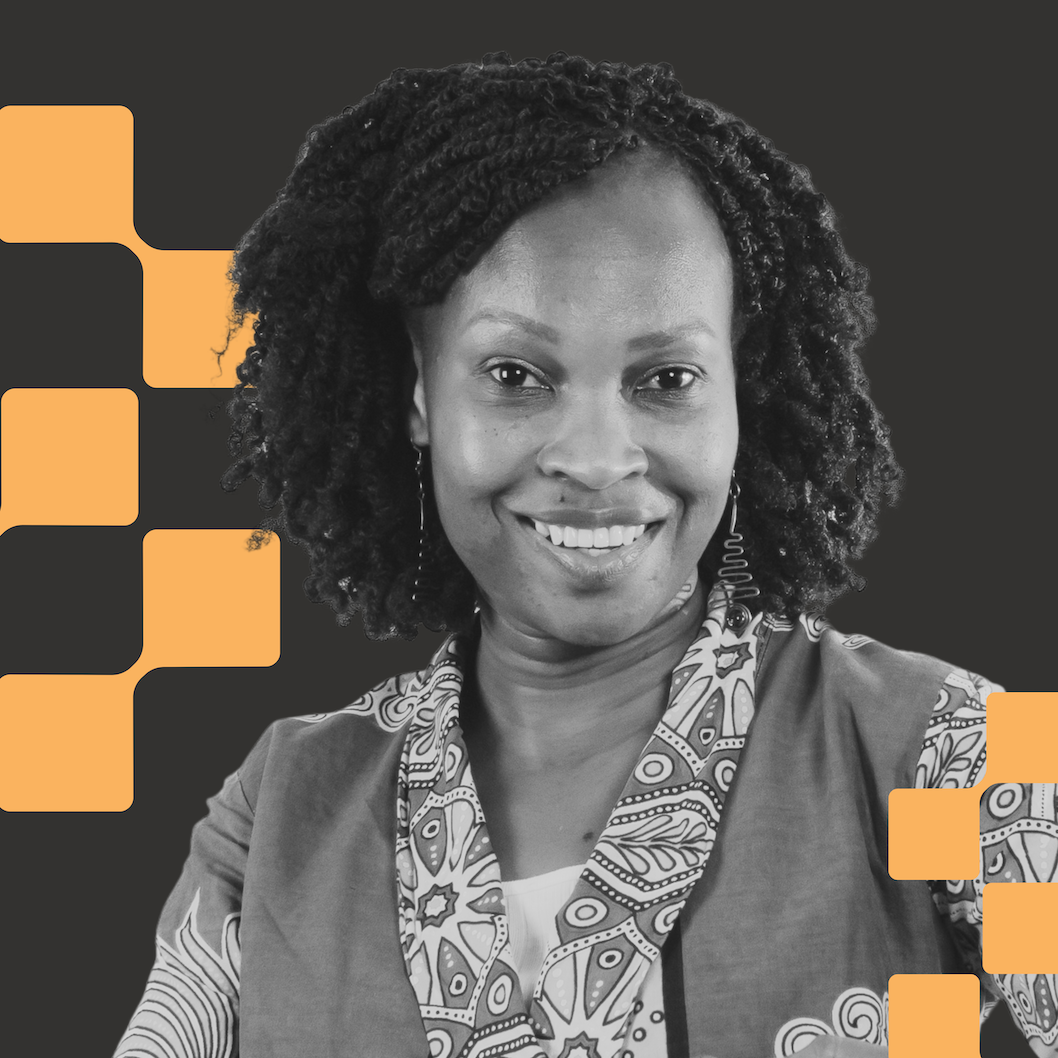
[00:00:31] Lucía: Today we're talking with Immaculate Mutheu, a finance specialist, mom, and activist who has worked with Friends of Lake Turkana, or FoLT, for the past 16 years. This indigenous women-led organization in Kenya was born out of the need to protect Lake Turkana, which has been facing destruction from the Gilgel Gibe III Dam and other upstream developments on the Omo-Turkana Basin, negatively impacting people's livelihoods, exacerbating conflicts, increasing food insecurity, and irreversibly destroying critical ecosystems.
[00:01:08] Lucía: That's why FoLT was born: to fight for the lake and the livelihoods of half a million indigenous people in both Kenya and Ethiopia.
[00:01:17] Lucía: Imma, we're very happy to have you here with us today.
[00:01:20] Imma: Thank you, Lucía, for having me.
[00:01:26] Lucía: How did you join Friends of Lake Turkana, or FoLT?
[00:01:29] Imma: So in the year 2009, I was sharing an office space with my current director, Dr. Ikal Angelei and she had just learned about the Gibe III dam; being from the community, it was really a concern. She approached me and told me, there's this campaign we are having and I need someone to help me put paperwork together. And I was so excited. I was like, yes, I'm gonna do it for you because of the activism in me; I knew this was going to be my contribution towards the case.
But as we were doing the campaign and we wanted to take the government of Kenya to court, uh, we were told you need to be a registered entity to do that. And that's how Friends of Lake Turkana was actually conceived.
[00:02:26] Lucía: And were you thinking about sustainability? Were you thinking [about] where would this organization be five or 10 or 20 years later?
[00:02:34] Imma: Absolutely not. For us, it was just, let’s do this. Let's stop the dam and let's go back to our businesses. And then now, as we went on, in the year 2012, Ikal was recognized by the Goldman Environmental Peace Prize because of the efforts.
[00:02:57] Imma: And that's when we started now thinking about the future. We realized we need to be stable as an organization so that we can support our community. And at that point, our organization we were barely making it in terms of meeting our full cost recoveries, our operational costs.
[00:03:20] Imma: And we were thinking, how do we even put money aside when our community is suffering, when even we can't meet our full costs as an organization?
[00:03:30] Lucía: You went from being a very sort of grassroots organization.
[00:03:34] Imma: Absolutely.
[00:03:35] Lucía: Into the spotlight at the international level and attracting a lot of donors and other stakeholders that were interested in what you were doing. What was your role in this journey, Imma?
[00:03:47] Imma: So one of my major, major roles I can say was to set up systems, tools, and processes in the organization. When we were receiving our first grant, all we wanted to do is to pay out our bills, our creditors. But again, as we started receiving funds these $10,000, $20,000- we realized that donors were asking for policies, which we didn't have. So what did we do as a young organization? Oh, give us the policies you have; we'll use them. But as we went on year by year, we realized we had borrowed from someone else's practice, which was not really, uh, practical to us because, being an indigenous grassroots organization based in a marginalized area, we have very many challenges.
[00:04:46] Imma: So what we had borrowed would not work for us. One of my roles was to…to retreat, to set up systems, tools, practices that were going to work for us, because we realized every time we had audits, we were fighting with auditors.
[00:05:03] Imma: Like, no, you don't understand. And all they would say, but that is what it's in your policies. Then we were like, oh, okay. So we began to understand that.
[00:05:14] Lucía: You said, as an organization that was in the territory and indigenous-led, we had many constraints and many things that did not adapt to those policies that you had borrowed.
[00:05:29] Lucía: Is there any concrete example that you can share with us, Imma, of something that you remember as a realization when that auditor came, and you were like, oh no. Why do we have that if it doesn't match our reality at all?
[00:05:40] Imma: Yes. So, a certain project that was being audited, and one of the questions was, why don't we have a participant list? The meeting was done in an informal setting under a tree, somewhere in a community. And it is really hard to control the population because people come in and go out at different times. And we don't give transport reimbursement or sustenance, you know. All we do is to have a goat slaughtered, cooked by the women, shared under the tree with the community. We would be like 200 people. And we have our engagements, and they're so productive, and we go home. But now the auditor was like, no, we need a procurement process for the goats procured. My goodness. We need to know how you selected the people who brought the water tankers because we provide water tankering for women so that the time they can spend going to fetch water from the rivers, it's the time they will use to sit down and listen.
[00:06:57] Imma: So we reward them by providing water. Uh, we want to know why. There's no participant list yet; you fed people. So these are the kinds of fights we had. And to us, it was unrealistic. Once you make someone sign, then you have told them, I will be remunerating you. I'll be giving you something. So to manage such expectations, we don't do a participant list for informal meetings.
[00:07:27] Lucía: Were you able to negotiate these policies with your donors?
[00:07:33] Imma: Yes. I can tell you a decade ago this was a no-no. And when a donor said that, we would say, okay, let's just invite you to come. Let's go to the field, have a feel. Get to experience our reality. Some would say, no, no, no, no. We are not coming up there. We have heard- it's a hotspot. Some are like, yes, we would come and we would drive to the field and they'll be like, now we understand.
[00:08:03] Imma: So these are some of the things, the cultural practices, the values that we had to make our donors understand.
[00:08:11] Lucía: How were you able to move away from a donor reliance and start thinking about sustainability for the long run?
[00:08:20] Imma: Back then, I think 90% of our funding landscape was bilaterals. Which was not really a good thing because our funding landscape was not healthy. I would say we were budgeting based on what we were thinking we were going to get. Or fundraise. And that's where the gap for the starvation cycle came in. So the next step was, let's budget according to our needs. Because when you do that, you are able to know: are you having surpluses or deficits?
[00:08:56] Imma: So, fast forward to today, we have diversified our income; we have multilaterals, we have bilaterals, we have public foundations. We have private foundations, we have movement funders and individuals, and we have generated income.
[00:09:13] Imma: We have two types of capital reserves. We have what we call operating reserves. And this is liquid. You should be able to have access to it within 72 hours because this is meant to meet your short-term or near day-to-day or month-to-month recurrent expenditure in the event that you have shortfalls. And for us, operating reserves were really useful, and it came through for us when..like during COVID, we had signed contracts, MOUs, but there was a delay in disbursement of funding. So for us, the operating reserves really came through for us. And it's actually recommended that you have six to 12 months' worth of operating reserves.
[00:10:08] Lucía: Was it easy for FoLT to create reserves?
[00:10:05] Imma: You need to understand your context as an organization, the environment in which you operate. So does your tax law, does your legal law in your country allow you as a not-for-profit making organization, to actually have some capital reserves? And if not, then what other options do you have? By the time you are building your capital reserves, you must have come out of the starvation cycle, or you are coming out of the starvation cycle. And you can't build on change capital if you are not having operating reserves. So one is a prerequisite of the other.
[00:10:57] Lucía: So operating reserves are very liquid, something you can use very fast. And I would call it sort of like a cushion for the organization. And those are based on how much the organization costs on a monthly basis. That's how you calculate what you need…
[00:11:14] Imma: Absolutely.
[00:11:16] Imma: And the second kind of capital reserve is what we call the change capital. And change capital comes in two forms. Maybe you have an innovative idea that you are thinking about in the future. And then the second one is in the form of land and buildings. And that's where, for us, we have seen it work. And we were lucky because one of the private foundations, we expressed the need for having an office and they gave us the seed capital, and that's how we bought land and built our office. You can use it to make savings, like on rent. Secondly, you can use it as collateral. Because we have come to learn that financing is not only for profit-making organizations, even for not for-profit making organizations. You can use the building, the assets that you have, like a building and land.
[00:12:13] Imma: For us, the Title deed is collateral. And in the eventualities where funding [is] delayed, you can actually, uh, approach a financial institution and ask for some overdraft or some loan and use that title deed as security.
[00:12:33] Lucía: Were there any tensions around creating reserves within the team? Within the board, within your donors?
[00:12:41] Imma: Coming up with the capital reserve, building them, it was really not a walk in the park. And one thing I need to mention is that it's really not easy to even start. It needs resilience; it needs patience; it needs discipline. But it's great to have them. And so I and my director, we were really sold on having capital reserves, and we knew it was going to work for us. We knew how important it was.
[00:13:11] Imma: And for us to start it, we needed an approval from our board. And it was really not so easy trying to, uh, convince the board why we need to put money aside, yet we are serving a needy community, and when the board was like, no, no, no, no, we can't really put money aside instead of serving our community, and it was the moral question issue. And so we had to table our case.
[00:13:41] Imma: How will we serve our community if we are not accessing the office? If we cannot be able to pay our people who will do this work? And so that's when it dawned on them how critical to have capital reserves for sustainability of an organization, uh, was and is. And so, after we had the board on board on this, the rest was easy
[00:14:11] Lucía: And are there any risks?
[00:14:14] Imma: [00:14:14] Yes, the risks are many, But, the returns are good and they're worth taking the risks.
[00:14:25] Imma: The first one is inflation; it's like one step ahead, two steps behind. Because of inflation, the amount of money that you're holding no longer has the quality that it had when you were planning for it. The other one is on currency fluctuations. Operating in an unstable economy, you will find that it is really not advisable to invest in your country. So perhaps in such scenarios, especially on this side of the Global South, you'd rather invest your money outside, in a foreign currency, so that you are safer. And for us, the low-risk investment that we thought we could have for our operating reserve was a fixed deposit account in a bank.
[00:15:19] Imma: All I can say is even as you plan to invest your capital reserve, gauge your risk appetite as an organization, and know exactly where and how to invest your capital reserves.
[00:15:35] Lucía: Yes, having clarity about the organizational risk appetite is key. What did donors say when you presented this idea of a reserve fund? And I ask you this because it's often something that we hear from leaders around the world um through our Financial Innovation and Resilience program, they’re saying, nobody's gonna give us money for that. What was your experience like? Do you have this in every proposal that you put out to donors?
[00:16:04] Imma: Yes, we do. Some come back, especially multilaterals and bilaterals, and ask, What is this thing we are saying? And some say, oh, we think that's a good idea. We'll see how to work around it. And so some even advise and say, just put it as institutional strengthening.
[00:16:26] Imma: Starting with the operating reserves was not easy. So, we got an individual donation of $500. And so here in Africa, especially in Kenya, we have a saying that says little by little fills the basket. So what I can say is, it is never too little to start your operating reserves. And so with that, we were able to even demonstrate and show that even when we are pitching that we have this, that we have started.
[00:17:02] Lucía: That's amazing. You went from a $500 start, and where are you now? How many months of operations, um, do you cover?
[00:17:13] Imma: It's a year. But what I can also say, operating reserves get depleted,
[00:17:20] Imma: But you need to have a good strategy of how to keep replenishing it. So like for us, our policy says it can't go beyond a certain threshold. Can't go below three months.
[00:17:34] Imma: So by the time it goes down to three months. We need to see how to replenish it. So do not feel heartbroken when you see your operating reserves are getting depleted.
[00:17:47] Imma: That is normal. That's why they are there. They're meant to cushion you, but it's good to keep working and have a good strategy [for] how you have to keep replenishing it so that you maintain six to 12 months.
[00:18:02] Lucía: That's so true. You have to be smart about how you use them and how you replenish them. Thinking back about this experience, what tips would you share with other finance leaders about this particular issue of building capital reserves?
[00:18:20] Imma: What really comes to mind is, please don't think that you are withholding money or you are withholding benefits for your constituent. Just know you are keeping yourself safe so that you can support them. Two: Be bold in the ask. The worst that a funding partner can say is no, but at least you tried. If you don't ask, you won't get, and I can tell you for sure with 16 years of experience, most of the funding partners have these resources, especially the private foundations.
[00:19:00] Imma: Be intentional about it, be ready for the pitch, have your framework. Capital Reserve also communicates to a donor that you are a very reliable and responsible organization that not only thinks about now, but thinks of the future.
[00:19:21] Lucía: Those are great points, Imma. I especially love the piece around intentionality, and I echo your invitation: for those listening, dare [to] ask, dare [to] negotiate with your donors. And also, when you think about your overall organizational sustainability and financial health, think about the role of capital reserves in that journey.
[00:19:42] Imma: Absolutely. And I think also my parting shot would be finance is for all, not just for the finance people, and for many of these concepts to work. You need teamwork.
------
[00:19:58] Get in touch with us for any questions or topics you'd like us to cover. You can find the resources mentioned in this podcast at springstrategies.org/podcast. Grit, Mission and Numbers is a podcast about the untold stories of finance practitioners working for social change and is produced by Spring Strategies.
[00:20:16] This podcast is not a substitute for legal, fiscal, or financial advice. Thank you for listening.
[00:20:25] This podcast is hosted and produced by Lucía Carrasco and edited by Canadian Podcast Productions.
[00:20:31] Additional editing, communications, and production support were done by our team at Spring. The music for this podcast is by Frontera Bugalu and Lawd Ito, courtesy of Epidemic Sound.


-1.jpg?width=2000&height=2000&name=Option%20A%20(2)-1.jpg)
.jpg?width=2000&height=2000&name=Option%20A%20(5).jpg)