Note: This transcript has been edited for flow, clarity, and readability.
[00:00:00] Lucía: When funding projects in Africa from Europe, a few questions come to mind: how to meet financial compliance while staying closely attuned to the realities on the ground? And above all, how to build a relationship of trust with Indigenous organizations and local communities?
In this episode, we explore these questions with a professional who understands both sides of the story: managing and allocating funds, while remaining accountable to donors.
[00:00:31] Lucía: I'm Lucía Carrasco, and you're listening to Grit: Mission and Numbers, a podcast where we hear from finance practitioners working for social change and the untold stories behind the numbers
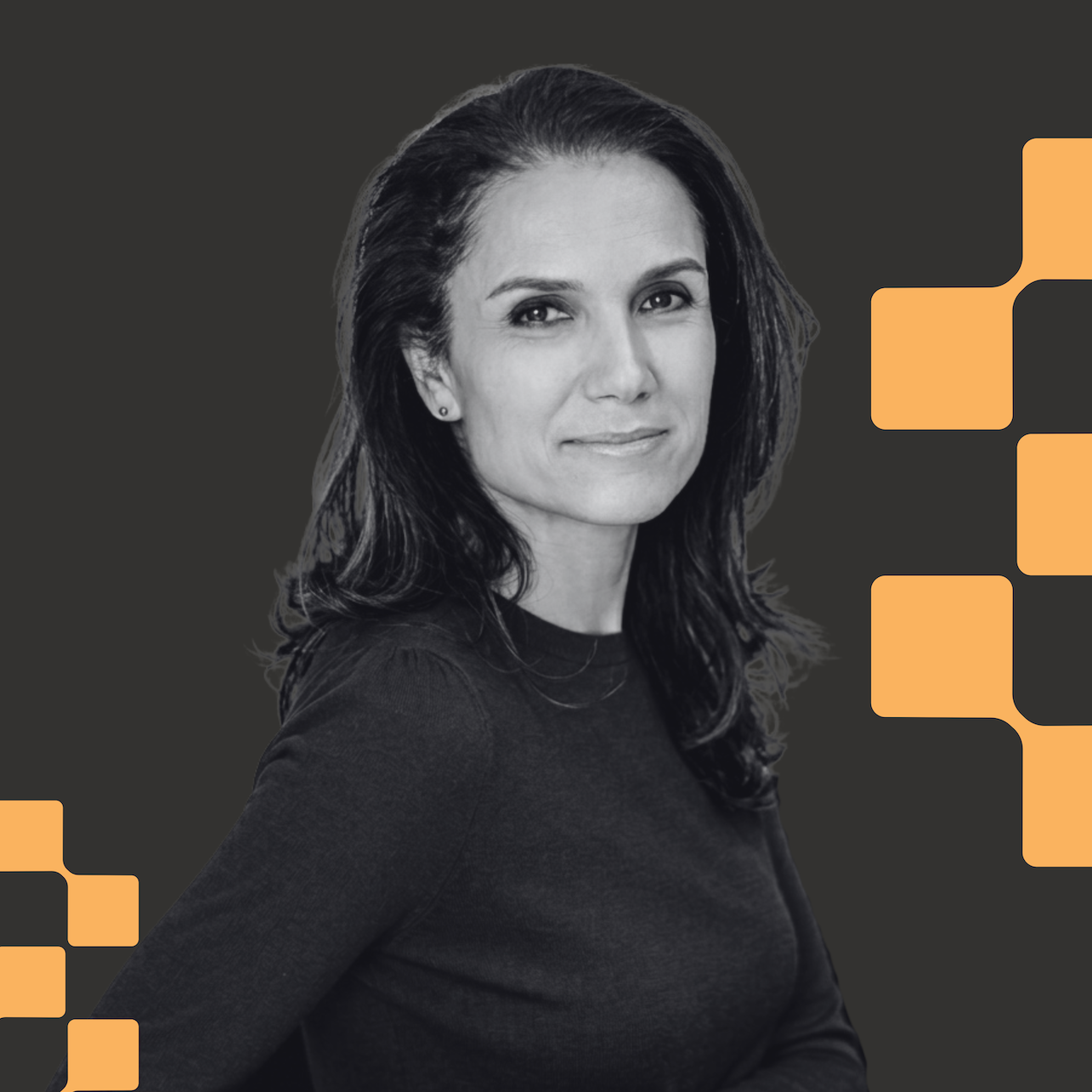
[00:00:45] Lucía: Today, we're talking with Nathalie Lefrancq, a finance specialist of Belgian and Moroccan origin. She has worked in the private sector, particularly in the pharmaceutical industry and the Swedish forestry industry. Since 2023, she has been the Finance Officer in Africa for the International Land and Tenure Facility, a mechanism dedicated to securing land and forest rights for Indigenous peoples and local communities. It is a role that offers a particularly interesting perspective on the challenges of funding... as well as on ways to collaborate.
[00:01:20] Lucía: Welcome, Nathalie. We're so happy to have you with us today. So, going back to your career path, you went from the private finance sector to working with NGOs, and specifically with a grantmaking organization, was there anything that surprised you about transitioning to these sectors?
[00:01:38] Nathalie: Thank you, Lucia. Thank you for your welcome. Finance, for large Western companies—in this case, European ones—is a field with a lot of strict rules. It is also, in institutional terms, a very mature and highly developed field. But in the context of development, we have to face the reality that a certain degree of flexibility and open-mindedness is necessary. That doesn’t mean being negligent. You can be principled and rigorous while still maintaining a certain degree of flexibility.
[00:02:17] Nathalie: The NGO sector is a field that navigates different realities. And so, one of the lessons I learned very early on in my work with Tenure Facility was the importance of listening to our partners—in my case, the people I work with across the African continent.
[00:02:40] Lucía: And what does it mean to really listen? Could you give us a concrete example?
[00:02:46] Nathalie: At TF, we work to secure land rights, but also to strengthen those land rights in ways that enable communities to benefit from them and, ultimately, sustain the security of their land tenure. We try to provide a certain level of support, but they know their context best. One concrete example is the transfer of funds in sometimes challenging security contexts.
[00:03:11] Nathalie: We live in a world where transfers are made through banks and digitally, but the reality on the ground is that, in some contexts, banking institutions aren’t evenly distributed across geographies or may be absent altogether. And sometimes there are banking institutions that we just can’t rely on. In the case of a country experiencing very serious security problems (which also affected the entire banking sector), we commissioned a banking study. Through discussions with about ten banks in the country, the study helped identify which ones offered competitive services in the affected regions.
[00:03:49] Nathalie: So, all of this forms an environment that our partners learn to navigate with a great deal of patience, and a deep understanding of the people and the local context. And I have to say, quite often, we have seen that they have found very ingenious ways of dealing with the lack of banking institutions, finding ways to transfer funds in extremely difficult security situations. This opened our eyes to the fact that many of our partners have developed and operate with very high-quality routines and rigorous procedures which allow them to effectively manage security risks.
[00:04:26] Lucía: What you’re saying is really interesting because, ultimately, your partners are developing policies and procedures that are adapted to their context, but that also respond to the requirements and realities that you, as a funder, expect regarding transparency and controls on the use of resources.
[00:04:43] Nathalie: Yes, absolutely. Indigenous and Local Communities face challenges encountered by very few companies or organizations operating within a Western context. So, we’re talking about a form of risk management that is very specific to certain cultural and humanitarian contexts. And there can be many challenges. Take, for example, the current epidemic in the DRC. Or the security crisis that Mali has experienced in recent months. So, listening to and understanding the specifics of local and national life is really what we try to do at TF.
[00:05:21 Lucía: And, how do you manage these tensions between the realities on the ground for the organizations and partners you support, and all the reporting and compliance that your own funders require? Because TF receives funds from various sources.
[00:05:40] Nathalie: This is an important point that deserves special attention. In the examples I described earlier, the bank study was not part of the financing for a particular project. It's important to note this because those costs were covered directly by the Tenure Facility. That said, this type of initiative was well received by the funders we work with, which meant that we were able to continue with this type of crisis management.
[00:06:05] Nathalie: And it’s important to note that our Board of Directors closely monitors these kinds of crisis response activities and follows up on a quarterly basis.
[00:06:17] Lucía: It’s good that you bring up both the governance aspect and how you keep your funders informed about these actions, since Tenure Facility has to respond to the requirements of many funders who support your grantmaking. But I’d like to stay with the point about how TF has this flexibility, since you also have your own resources that you can use to finance this kind of study or respond to challenges that you may not necessarily have anticipated. This flexibility is something we often discuss with organizations through Spring’s Financial Innovation and Resilience (FIRE) program—the need, where possible, to build up capital reserves that allow for this flexibility. What can you tell us about that, and about the organizations you work with in Africa?
[00:07:06] Nathalie: Generally, this is the type of activity that we see among partners who manage to attract other types of funding besides support from the Tenure Facility. That’s when it becomes possible. There is, however, a growing awareness about the need for this type of funding. I should also say that funders, in general, are discussing how to provide grants that allow partners to respond to disasters or make other types of longer-term investments. And I think this is where it’s important to talk about strategic planning with our partners. Because when you have a vision that extends over several years or more, it becomes easier to finance goals like this, as well as to plan for the funds you receive and negotiate budgets. The effort we make at TF is precisely to ensure that budgets are as realistic as possible. But then, that’s just the beginning of the conversation.
[00:08:00] Lucía: Yes! I like what you say about the budget being just the beginning of the conversation. Things change and evolve. And something we hear often in the FIRE programs is that leaders don't feel able to say no to the funder because there's such a need for resources that it's a real privilege to be able to say, "No, I don't agree with your conditions." It also makes me think about the fact that, as we’ve already discussed in this conversation, organizations are often immersed in day-to-day needs and ongoing emergencies. Leaders don’t have either the time or the space to think ahead and envision the future. What are your thoughts on that?
[00:08:41] Nathalie: Yes, I understand. From my experience, we’ve always managed to find the budget that allows the implementation to roll out as smoothly as possible. But a budget is an exercise in forecasting. Projecting into the future isn’t easy or intuitive. It’s important to have a dialogue with the donor about capacity building. In my specific case, this means strengthening administrative and financial capacity. As a funder, we often ask our partners to develop a capacity-strengthening plan.
When a partner has a vision for their organization's development, it's good to present it to the donor and highlight the positive impact it will have on the partnership. I would say to organizations in Africa or elsewhere: develop a capacity-building plan and share it. Some things will have a direct impact on the project, while others will have an impact on the long-term collaboration, benefiting both funders and partners.
[00:09:42] Lucía: That’s a very important point: as a partner, you should be able to show the funder your vulnerabilities or needs, and to have a really open, direct conversation with them to say, “I really need help here.” Based on your experience, what have been some of the most important or transformative actions you’ve seen financial teams take to ensure the sustainability of Indigenous and Local Community organizations?
[00:10:14] Nathalie: I would say investing in human resources within the finance departments. Often, there may be only one or two people working in these departments. And that creates a dependency on those one or two people. If there is a change, the entire organization becomes vulnerable. Unfortunately, that’s something I’ve observed several times.
So, I would say, have one or two additional people, so that you can spread the risk. This part of the organization is also directly connected to audits. Strong audits, or audits that are improving over time, are actually a better indicator for a funder. Funders look closely at audits from current and previous projects.
My other piece of advice is for directors themselves to invest their time in learning about finance.
[00:11:00] Nathalie: That will allow them to understand some of the ins and outs of finance and, for example, participate in the budgeting process. And it’s true that a well-developed, well-structured budget makes an enormous difference during implementation and facilitates better crisis management.
[00:11:19] Lucía: So, when we talk about financial innovation for NGOs, we tend to imagine big changes, often outside of our day-to-day practices. And what you’ve just illustrated is that changes in the way we operate can have a considerable impact on an organization and its sustainability. What advice would you give regarding the role of finance professionals working within a grantmaking organization like Tenure Facility?
[00:11:50] Nathalie: We learn a lot of things. It really is a learning process for both us and our partners. If I had to mention some of the things that really stand out to me, I would say that those of us working on the funder side, particularly those of us working with funder finance teams, have a particular responsibility in this regard: to open that channel and maintain an open line of communication with finance staff at our partner organizations. As a funder, we have an opportunity to set the tone when it comes to communication.
[00:12:21 Nathalie: Being very attentive and listening closely so that we can identify initiatives that emerge spontaneously, and then support them with financial training, has produced positive results. And here, I really have to give credit to the Spring team. The fact that you involve the finance leadership and program teams in discussions about risks, audits, and the importance of accounting really plays an important role. It helps them better understand how finance works, while also making finance staff feel more heard. At the same time, leaders and program or technical team members gain a better understanding of the needs and expectations of finance teams, which helps them do their jobs better. Strengthening this synergy is really very important for the development of the whole team. Often, it makes things move forward quite quickly.
[00:13:12] Lucía: First of all, thank you for the shout-out! We at Spring say that finance is for everyone. Ultimately, this shared knowledge can help organizations move beyond dependency. And following this line of thought, something organizations in the Global South have been asking for—for many, many years—is to manage resources directly within our communities and contexts. What could you tell us about that?
[00:13:41] Nathalie: That is precisely the ambition of the Tenure Facility. It’s the reason we provide all of this support for administrative and financial capacity strengthening: to enable partners to receive funds directly. Once they are able to receive funds directly from us, they will then be able to receive funding from other donors as well.
And often, the Tenure Facility is, so to speak, the first funder for partners. And this is only possible because capacity strengthening takes place at the same time as funding. In any case, I would say that there is a real commitment on our part to facilitate direct funding to Indigenous organizations and Local Communities.
[00:14:21] Lucía: And so, my last question for you: NGOs have gone through a fairly difficult period over the past year, and many of the shifts in funding international cooperation, for example, are ongoing. So, coming back to what you said about staying attentive and listening, what has your experience been at the Tenure Facility in relation to these changes—not only in terms of the work you do with organizations on the ground, but also as a recipient of funding yourselves? Have these changes affected you as well?
[00:14:54] Nathalie: It’s true that the suspension of funding is something that has affected many organizations in Africa. It’s important to maintain a dialogue with organizations about it, which is precisely why the communication channel I referred to earlier is even more important in situations like this. Frequent communication can help our partners get through these difficult periods.
[00:15:15] Nathalie: At the Tenure Facility, the number of projects we have has increased; we have many private donors. And I think there is growing enthusiasm and interest in securing land and forest tenure across the continent. Africa is enormous, and I think international funders are increasingly realizing the funding disparity that exists between this continent and the others, even though it has much to offer in terms of biodiversity. I think many are realizing that this is an opportunity not to be missed when it comes to supporting land tenure security.
[00:15:48] Nathalie: And I want to say that I’ve been very impressed by several of our partners in Africa. Millions of hectares are being secured every year. It’s a movement that’s gaining momentum.
For example, in Tshopo, DRC, in a project where one of our partners has been working this year, they secured 860,000 hectares of forest. So there really is progress being made, and I think it’s important to tell people about this. It’s not simply about hope; there are also concrete achievements happening every year, even every month in this area.
[00:16:26] Lucía: Nathalie, thank you so much for joining us and for sharing this encouraging news. It’s been a great conversation.
[00:16:35] Nathalie: Thank you, Lucía. It was a really interesting conversation. Finance is about human relationships and the management systems that foster sustainability and financial maturity, which open doors for organizations.
------
[00:16:56] Get in touch with us for any questions or topics you'd like us to cover. You can find the resources mentioned in this podcast at springstrategies.org/podcast. Grit, Mission and Numbers is a podcast about the untold stories of finance practitioners working for social change and is produced by Spring Strategies.
[00:17:15] This podcast is not a substitute for legal, fiscal, or financial advice. Thank you for listening.
[00:17:24] This podcast is hosted and produced by Lucía Carrasco and edited by Canadian Podcast Productions.
[00:17:29] Additional editing, communications, and production support were done by our team at Spring. The music for this podcast is by Frontera Bugalu and Lawd Ito, courtesy of Epidemic Sound.