

Power, repair and what rivers teach us about tending the change we set in motion
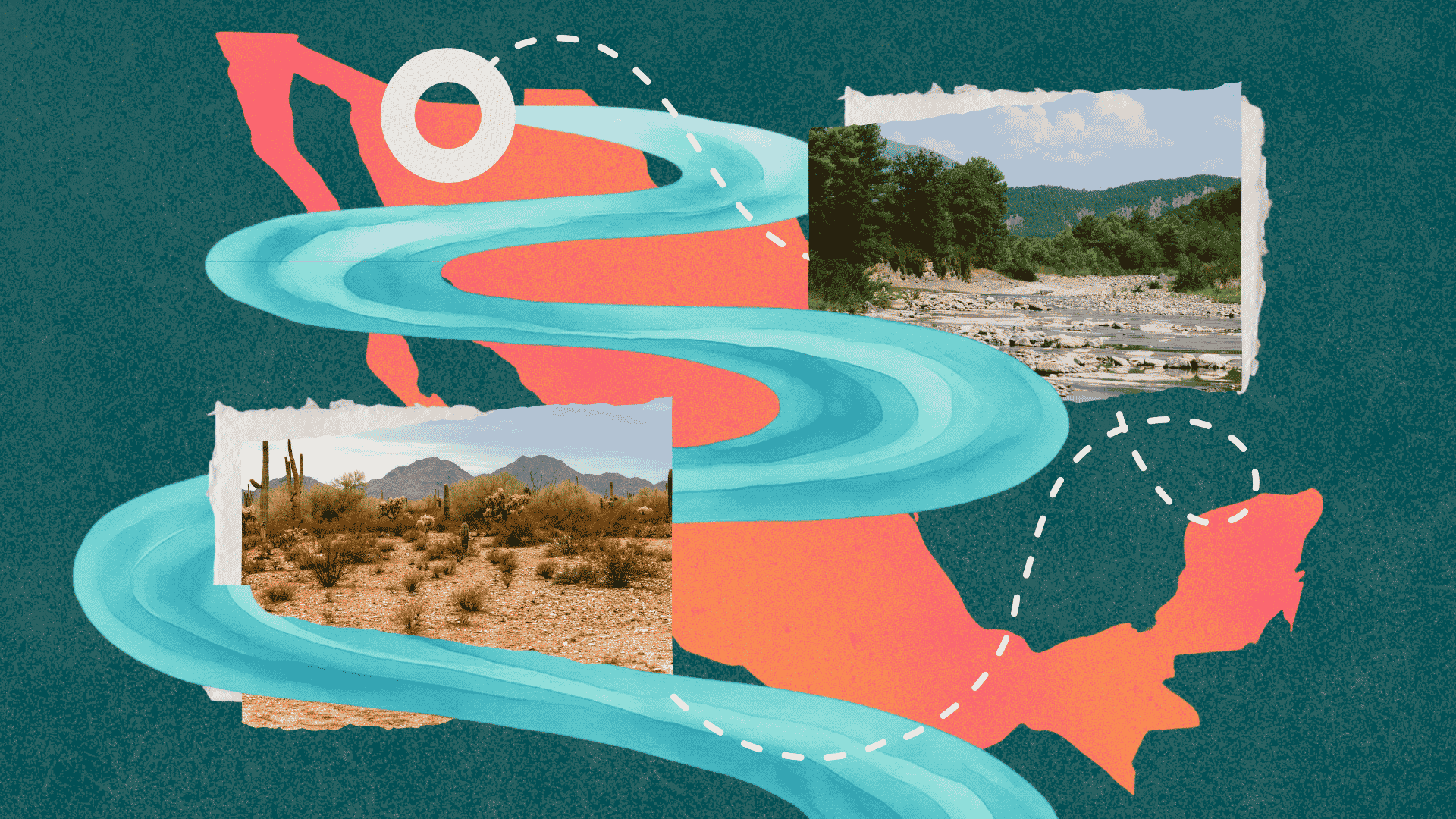
 Spring Leadership Fellow Erin Blanding reflects on borderlands, rivers and watershed restoration to explore how leaders can channel power, tend to their decisions, and practice ongoing relational repair. This is the second in her series of blogs exploring how nature-based and ancestral connections deepen leaders’ abilities to play transformative roles in their organizations and movements. Read Blog #1.
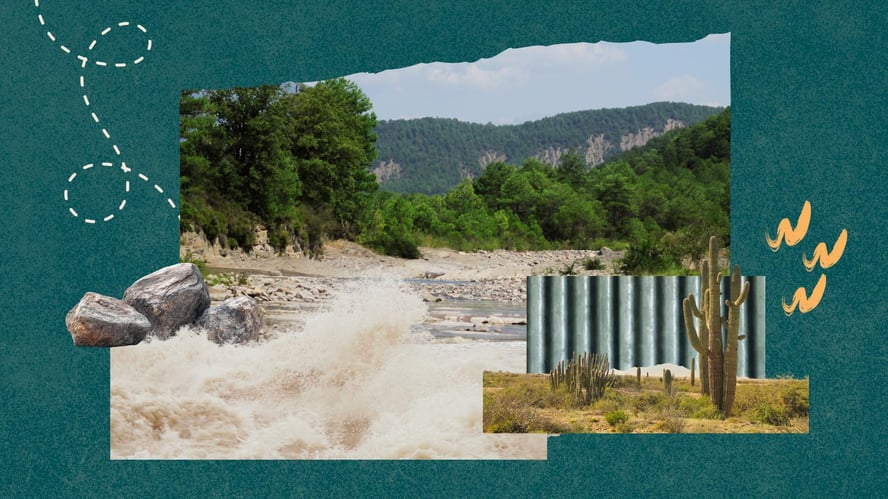
I was standing with my friend Raul in the desert outside Agua Prieta in Sonora, Mexico, when I saw a flash flood wrench away a piece of the United States border barrier.
Branches and debris came rushing down the arroyo (a river wash, or area along the river that was usually dry). Water backed up against the barrier, and then I watched a piece of it give way and go downstream.
I looked over at Raul, wide-eyed. He said something I would hear from others in the borderlands for years afterward, “Nature knows no borders.”
For eleven years I lived along this border between the U.S. state of Arizona and Mexico. In the summers, I took youth social justice groups into the desert to leave safe drinking water for people crossing into the U.S.without papers. We’d hike up the wash on the Mexico side to fill huge water containers and mark them with a flag people could see from a distance. If you were walking through here in summer, trying to stay out of sight and carrying what you could, running out of water could kill you.
That danger was part of a policy choice. The U.S. called its strategy “prevention through deterrence.” As enforcement closed off more accessible routes, officials expected people to try crossing in remote terrain and counted on the desert itself to deter them. Our water drops were one way of organizing together to keep people alive in conditions that had been deliberately made more dangerous.
Summer after summer, I’d see crews building another barrier across the mouth of that same arroyo. I remember corrugated metal and concrete cylinders as big around as an elephant’s waist. The materials changed every time in an attempt to find one that would hold. Come August, the monsoon water still came down the wash.
I watched some version of this happen every year. The flood would push through, and pieces of the barrier would go with it. I still think about the force of that water. I also think about how much power the barrier exercised even when it failed. It changed where people walked and what they had to risk. It changed how water and debris moved through the wash. The flood could take a piece of steel downstream. The next summer there would be another crew there.
And there were still people who needed water.
It took me a while to see how much was already at work in that river wash, from the force of the monsoon to the U.S. government counting on the desert to do some of its work. But people have a power of their own and still found their way through … and we kept going back to leave water.
The work of slowing water
In those same borderlands, just a bit further east, Valer Austin, an elderly amateur rancher, began hauling rocks into river washes on her land.
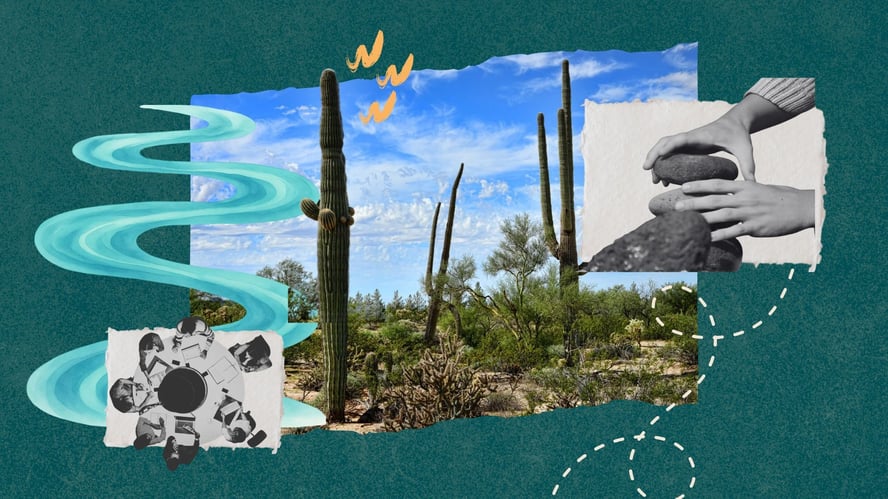
Years of damaging land use from overgrazing cattle had left channels cut deep into the earth. When the rains came, water rushed through them, carrying valuable topsoil away with it. With the rocks, Valer and the people she worked with built small structures, called trincheras, to slow the runoff. That way, water could soak in and sediment could settle. They drew on techniques Indigenous Peoples in the region had used for generations. After a rain, there was something new to pay attention to. Where had soil collected? Where were plants taking hold? Where should the next stones go?
What began with work on the land where she lived became part of a much larger restoration effort through the Cuenca Los Ojos conservation effort in the Río San Bernardino watershed, which is part of the larger Río Yaqui basin, the largest in northwest Mexico, spanning Sonora and Arizona. The project Valer started brought back five miles of surface water as, little by little, wetlands that had dried up nearly one hundred years ago were restored.
In the first blog of this series, I wrote about the story of monarch butterflies, and the value of seeing ourselves in a larger story of systems change: each of us are one participant among many in a migration that takes generations. It would be easy to hear that and think our part is small and thus less valuable—but that’s not what Valer’s story teaches us.
Think back to the brute force of the concrete and metal barrier back at the border. Ultimately, it changed nothing about the river system. But in Valer’s story, the health of the entire river system was transformed. This depended not only on her or the generations-old knowledge about how to read the land and water; it depended on the people’s willingness to come back year after year and make adjustments to the placement of the stones.
I find something hopeful in this story about how much a person can set in motion from where they are, and how much of what happens next depends on staying in relationship with the people and the places doing the work with them.
Placing the stones changed what the water could do.
Then, the flow of the water changed and showed the people what they could do next.
What we come back to learn
These stories from the river wash make me curious about what’s already shaping the choices we think we have power over. Power is often talked about as something we wield or cede. And while our organizations do usually include people who can make real choices, the kind of power that changes systems seems to be something that is channelled, over time, between and across relationships.
As a decision-maker at a foundation, let’s say I move a deadline up. It might seem like a small change where I sit. But someone else at the organization has to call a community partner and explain why a promise has changed. If this keeps happening, my colleague may end up spending more and more of their time trying to keep that partner relationship intact. By the time I hear about it, the partner may have stopped bringing us ideas they would once have trusted us with. Would my colleague notice? Would they tell me? If they did, how would I respond?
Accountability is power channeled toward repair and integrity. Much like in the river washes, repair takes shape when I’m willing to be changed by the perspectives of my colleagues and partners, even if I still believe I had good reasons for making the decision. Sometimes there’s something I can undo right away. Perhaps I need to revisit how decision-making power is distributed and who is asked to absorb relationship tensions. Sometimes, situations like the example above unearth a more complex pattern of staff making promises that other staff have to break (there can be lots of reasons for that, and changing it is part of a longer conversation).
“Nature knows no borders,” Raul said.
I think about that when I catch myself trying to make something hold because I want it to. Interventions applied by force, like the border barrier, that aren’t in harmony with the wider system will usually be overwhelmed or rejected by the system eventually—but that doesn’t mean they don’t cause real harm along the way.
The arroyo that Raul and I walked through was doing what it had done for generations: carrying away what was not built to stay. But not too far away, the water flowed over and under stones, leaving behind enough soil for new roots to take hold.
Repair is part of what a living system does, sometimes so slowly you have to come back season after season to see it.
From where I stand in the watershed of my leadership, I have some power to shape what happens. I can place a stone and change where the water goes. But then I have to come back, and keep coming back…and, be willing to be changed by what I find.
Keep learning in our 2027 Watershed Leadership cohort

Building our 2026 dialogues series, we're excited to be launching a new nature-inspired leadership program. Designed for experienced changemakers who are ready to seed the conditions for radical change and the regenerative futures we dream of, Watershed Leadership is accepting expressions of interest and will open to applicants in early 2027. Is this immersive nine-month cohort program for you?
Learn more about "Watershed Leadership" and express your interest to get priority access >>