Note: This transcript has been edited for flow, clarity, and readability.
[00:00:00] Lucía: What comes to mind when you hear the word “governance”? In this episode, we're taking a closer look at a central aspect of civil society organizations' finances: the role of the board in financial sustainability. What does good governance mean? And how can boards and finance teams go beyond compliance to become strategic partners?
[00:00:26] I’m Lucía Carrasco and you’re listening to Grit, Mission & Numbers: a podcast where we hear from finance practitioners working for social change and the untold stories behind the numbers.
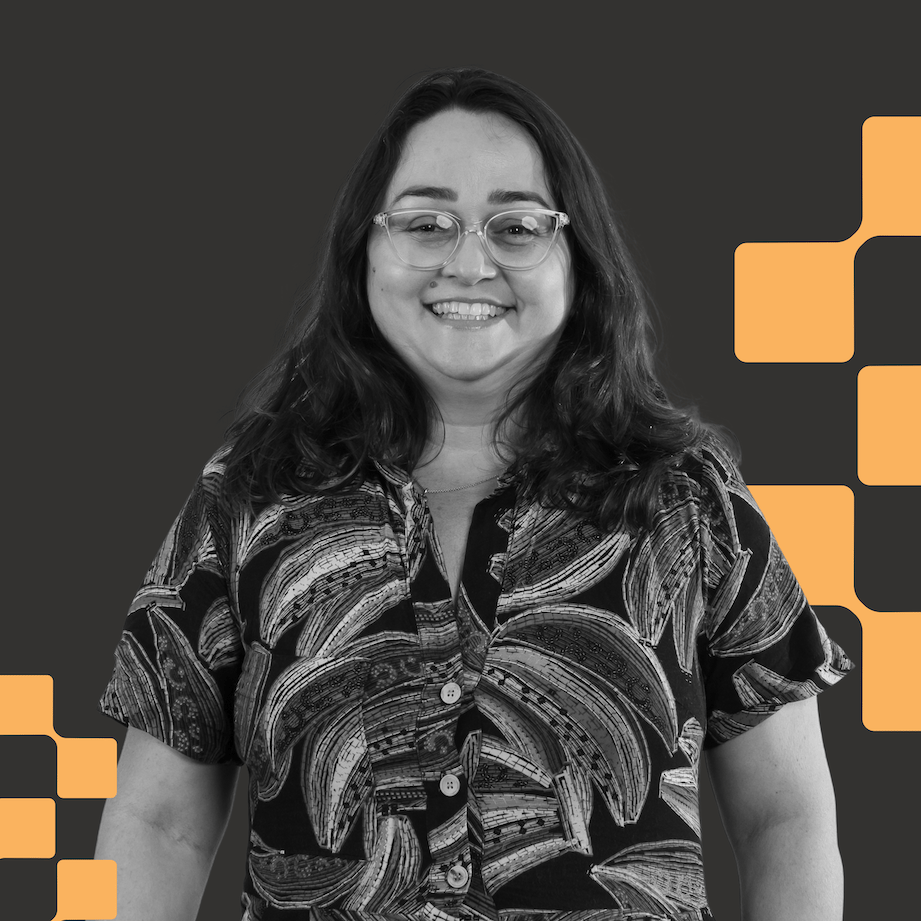
[00:00:39] Today, we're speaking with Adriana Moura, a Brazilian from Rio de Janeiro who has served as Finance Manager at the Institute for Climate and Society since 2021. Prior to that, Adriana spent 21 years as Finance Manager and People & Culture Focal Point at the Brazil office of the Ford Foundation. Throughout her career, she has also worked as a financial consultant, supporting Brazilian civil society organizations in strengthening their financial sustainability. She is currently part of the Audit Committees of the Institute of Religious Studies and the Burle Marx Institute.
[00:01:15] Welcome, Adriana. It's a pleasure to have you with us today. So, I know you studied accounting and spent many years working for a major, global private foundation—the Ford Foundation—in Brazil. But now you're working for a local organization. I’d love to hear about your career journey and that transition in particular.
[00:01:37] Adriana: Thank you, Lucía. It's a pleasure to be here with you today.
When I first started studying this field, there was almost a stigma attached to it. People tended to believe that finance and accounting work in the nonprofit sector—in NGOs—was relatively easy. So I often think about how to break down those stereotypes, the idea that finance professionals in NGOs don't have much work to do. We work very hard—really hard, Lucía.
[00:02:13] The biggest reason I decided to make this career change was that, for many years, I'd only experienced one side of the nonprofit sector. I was very much immersed in the perspective of a private funder with a well-established endowment, highly flexible funding, predictable resources, and essentially a single source of funding. From a finance and accounting standpoint, things were much simpler.
Eventually, I realized I wanted to contribute more directly to the field and experience a different perspective. I thought I'd really like to be on the other side. It was a completely different world, one that had always seemed out of reach to me. Of course, working for a foundation teaches you a tremendous amount because there's so much structure and support—it's a real privilege.
[00:03:04] Making that transition helped me realize that the role of finance isn't just about controls and management. It can be much more strategic and much closer to the organization's mission and day-to-day work. Finance takes on a different meaning.
[00:03:11] Lucía: It's very interesting what you're saying about the difference between working on a finance team at a private foundation versus at an NGO. In civil society organizations, finance goes beyond managing resources—it becomes a key driver of the organization's long-term sustainability.
[00:03:39] What can you tell us about the role of the board in an organization's financial health? And, for that matter, why are NGOs expected to have boards in the first place?
[00:03:54] Adriana: That's a great question.
In Brazil, some organizations are legally required to have a board, depending on how they're registered. But beyond statutory or legal requirements—and beyond simply complying with regulations—boards are important because organizations manage many different types of resources and operate in highly complex environments.
[00:04:15] The board helps ensure transparent governance. It gives us confidence that the resources we've raised are being used to advance our mission and that there has been no misuse of funds. That's why it's so important to have well-defined policies.
Sometimes people say, "Aren't we just creating more bureaucracy by adding more policies?" But policies provide consistency. They ensure everyone follows the same standards. So when someone joins or leaves the organization, those principles remain in place and continue to guide the organization.
That's why we need a board—not only to meet legal or statutory requirements, but also to strengthen our governance and transparency.
[00:04:56] Lucía: You mentioned the concept of governance, which encompasses the rules, processes, and practices that support an organization's legitimacy, transparency, and ability to carry out its mission. Is there a single formula for achieving good governance?
[00:05:15] Adriana: We hear the word “governance” all the time. But governance can mean different things depending on the context of a particular NGO.
Governance isn't only a formal structure made up of rules and assigned roles. It's fundamentally about how collective decisions are made. Governance isn't a predefined model that can simply be applied to every organization in exactly the same way.
[00:05;40] Every organization operates within its own cultural context. There are different community and organizational dynamics. For example, I can't expect a policy to be approved within a month if the governance structure includes 10 leaders and requires approval from a general assembly of 300 people.
So, it's not a matter of saying one model is more or less efficient than another. We have to be very careful, because there is no single governance model that works for every organization.
[00:06:09] Lucía: Right. Governance structures exist to support an organization, and there is no one-size-fits-all formula. But you mentioned a few fundamental principles that are essential for good governance: accountability, transparency, the rule of law, and financial management. What about from the donor's perspective?
[00:06:30] I’ve heard donors express concerns that an organization's governance is not strong or effective enough. Based on your experience, what can a finance professional do to strengthen governance while maintaining donors' trust?
[00:06:53] Adriana: Absolutely. When we hear something like that, we need to listen with an open mind and be prepared to make changes. I would respond with another question: What do you recommend? What kinds of mechanisms would you suggest? Is there any funding for institutional capacity-building that we could access to help strengthen our internal governance? That's the direction I would take.
[00:07:14] So, if a funder tells me that our governance isn't where it should be and needs improvement, the first thing I'd want to understand is why they reached that conclusion. I'd also want to know whether they could offer any support to help us improve. That creates an opportunity for dialogue and collaboration.
[00:07:32] Lucía: I think that's an excellent idea—turning feedback or a challenge into an opportunity to strengthen both your organization's governance and your relationship with the donor.
Building on that idea of opportunities—and of understanding whether a board is functioning effectively—one of the questions we ask before organizations begin our FIRE training program, through which we have worked with over 500 organizations, is: To what extent is your board involved in your organization's finances and resource mobilization?
What we've learned is that in more than half of the organizations we work with, the board participates in financial matters and fundraising only occasionally, rather than on a regular basis. What advice would you share with other finance leaders about engaging boards more actively in finance and resource mobilization?
[00:08:27] Adriana: That's a very interesting question, Lucía.
Let's say that almost 100% of board members are highly accomplished people who genuinely want to support the organization. At the same time, they usually have very limited availability, and almost all of them serve as volunteers.
People often say, "Our board only gets involved when we ask them to." But we're the ones who are running the organization every day. If we don't ask for their support, if we don't create opportunities and regular channels of communication, they'll never know when we need them.
So the real question is: how do we build open communication and a relationship of trust with our boards?
Serving on a board isn't just about contributing—it's also about learning. It requires humility and a willingness to exchange ideas. No one should approach the relationship as if they're above anyone else, because we're all working toward the same purpose.
[00:09:20] At my organization, for example, we have a governing board made up of nine members. Within that board, we've established several committees. We recently created a crisis committee to help us think through what's happening around the world in this new geopolitical landscape. What risks should we be paying attention to that we may not be seeing today?
Some NGOs also have an audit or fiscal committee that focuses more specifically on financial oversight and accounting matters.
The key is to make the best possible use of board members' limited time by focusing their attention on issues that are truly strategic and require timely decisions. We need to rethink how our governance structures operate so they can keep pace with the realities facing the nonprofit sector today.
Most importantly, we need to remember that the board isn't there to police the organization—it's there to advise it. The board should be involved before problems arise, not only after they happen.
That means we have to invest time in building that relationship, because doing so will strengthen our organizations tremendously.
[00:10:25] Lucía: I love that: the board is there to advise.
And yes, both the geopolitical and philanthropic landscapes are changing. We're witnessing a historic decline in foreign aid, which is having a significant impact on many NGOs around the world. At the same time, we're seeing changes in donor practices as well.
How can a board help guide and support an organization through these changes?
[00:10:59] Adriana: The geopolitical landscape is definitely changing our operating environment, so we need to develop and implement a risk management policy.
Our board supported the creation of a reserve fund. We received a general support grant, which provided flexible funding, and with the board's backing, we were able to establish that reserve.
At the same time, our internal team doesn't have investment expertise. So we created an investment committee and invited one of our board members—someone with experience in capital markets and investment funds—to advise us.
Increasingly, we're realizing that we need to create specialized structures because there are so many important issues that require different kinds of expertise.
[00:11:38] And with our funders, our donors— we are noticing a change in practice. They are much more attentive. They are asking us for many more audits, they are asking for many more written internal controls, they are requesting policies they weren’t requesting before—all to reach a level of compliance that they consider appropriate.
[00:11:57] Before, they were checking boxes, and now they want to know more. So this issue of governance and compliance has become much sharper because of the funders. And we have to be prepared to work with our boards to respond to this. And once again, it’s not about complying just because our funder requires it. It’s because it’s a good practice that, if implemented, will give us long-term sustainability with other funders as well.
[00:12:23] Lucía: That’s right. And speaking of good practices, considering your experience at a large private foundation, are there other board-related practices you would recommend for NGOs?
[00:12:43] Adriana: Something relevant we can take from large foundations is having really well-defined board roles and responsibilities. Because today, many organizations’ boards are made up of people with the same expertise— strong programmatic knowledge or big names in the field. What I wish I saw more is having a type of board that brings in what’s missing: the complementary areas of expertise—whether it’s technology, communications, or finance—, you know?
[00:13:11] Without this diversity, strategic planning is impacted. So, who are the people we need to invite to our board?
[00:13:16] It’s the people who think differently who will champion our goals and help us bring more strategy to our financial sustainability, right?
[00:13:27] Lucía: This is so true. And so, to close this conversation, let’s look ahead: do you foresee any change in governance practices in our sector?
[00:13:42] Adriana: We need to talk about digital security. This is a topic we’re hearing a lot about, a major trend.
[00:13:50] Another hot topic in Brazil right now is mental health and employee well-being. Very recently, the NR1 law was introduced at the national level. It requires all companies and NGOs to report whether their employees are mentally healthy.
[00:4:03] And something I constantly see are the ways in which grassroots organizations and local communities need to be included as equal partners in decision-making. It is very common to hear from these organizations that funding does not reach them directly on the front lines. Sure, the funding eventually arrives, but there are several layers that the money goes through before it reaches them. And we know that some funders also want this kind of change, right?
[00:14:31] I see this as a trend, so these grassroots organizations need to be prepared for this with governance structures. And that can be scary if you think you have to implement it exactly as it’s done in the corporate world, you know? The question is: What do these organizations need to have in terms of governance in order to manage direct funding?
[00:14:54] Lucía: Thank you Adriana, for sharing your wisdom with us today.
[00:15:00] Adriana: It was a great pleasure. Always good. I talk a lot, I go off on tangents and wander.
[00:15:08] Lucía: Of course! The idea here is to wander together and exchange experiences about finance with leaders like you. Let’s highlight a few points for our listeners:
[00:15:18] In case someone is wondering, finance professionals in NGOs work a lot. And beyond all the financial issues, they also play a key role in promoting good governance practices. Good governance is not about satisfying donors.
[00:15:33] It strengthens legitimacy, transparency, and the capacity for action in our organizations and movements. It protects leaders. Shared rules create trust, and trust attracts lasting support. We need to ensure that our boards are diverse in terms of experience and knowledge.
[00:15:52] And we need to invest in how we work with them. There is no single way to do this. That said, governance is a practice. We need to keep paying attention, be attentive to emerging trends, risks and opportunities.
[00:16:05] And for those finance professionals listening, I have one question: Are you making the most of your board members?
[00:16:14] Get in touch with us for any questions or topics you'd like us to cover. You can find the resources mentioned in this podcast at springstrategies.org/podcast. Grit, Mission, and Numbers is a podcast about the untold stories of finance practitioners working for social change and is produced by Spring Strategies.
This podcast is not a substitute for legal, fiscal, or financial advice. Thank you for listening.
[00:16:41] This podcast is hosted and produced by Lucía Carrasco and edited by Canadian Podcast Productions. Additional editing, communications, and production support were done by our team at Spring. The music for this podcast is by Frontera Bugalu and Lawd Ito, courtesy of Epidemic Sound.

-1.jpg?width=2000&height=2000&name=Option%20A%20(2)-1.jpg)
.jpg?width=2000&height=2000&name=Option%20A%20(5).jpg)