A six-session learning journey for civil society leaders
What if today's volatility in grant funding isn't just a crisis, but a historic transition—one that invites us to innovate, experiment, and transform how we operate?
The emerging possibilities of social enterprise, impact investment, cross-sector strategic partnerships and other financial approaches offer pathways for generating and circulating resources in ways that could strengthen our work and contribute to more regenerative economies.
Horizons is a learning journey for civil society leaders eager to understand this changing landscape and explore the potential of enterprise, investment and cross-sector collaboration for their organizations and missions. Participants will learn from real-world examples and experiences, explore capital beyond grants or individual donations, and ask deeper questions about money, sustainability, risk and the future of civil society. What assumptions might we reconsider? What new relationships, capabilities or organizational models and mindsets might be required?

Leaders who join Horizons will leave the training with greater clarity about whether, where and how non-grant pathways might be appropriate, relevant and viable in their context.
Language of instruction: English
Group composition: Executive directors and senior leaders who hold responsibility for organizational strategy, mission and long-term sustainability.
Six Virtual Sessions: Each session will combine real-world case studies and examples, peer exchange, facilitated reflection and an exploration of how to practically apply these learnings to your own organization.
Accompaniment: After the six facilitated sessions, you will have the opportunity to join a group of 4-5 other participants to further explore the emerging pathway you're most curious about. These groups will meet three times for 90-minute sessions before the end of June 2027.
Live Zoom sessions will take place in April 2027 on the following dates and times:
What is changing, and what becomes possible, when we understand this as a transition rather than only a funding crisis? This session explores the limits of grant dependence, as well as Three Horizons framework, and the changing ecosystem across NGOs, philanthropy, capital holders, and government.
Participants examine concrete examples —especially from the Global South—and create a map of the forces shaping their specific context alongside emerging opportunities in, enterprise, investment and cross sector-collaboration
What assumptions about money, impact, organizational form or purpose might we need to reconsider to engage meaningfully with the Second Horizon? (Actions experimenting with more diversified approaches to mobilizing funds?)
We’ll surface inherited beliefs about money and explore how different forms of value can be generated, governed and circulated. Participants will take away actionable insights about their assumptions that can help them to move their organizations from self-sufficiency toward interdependence, partnership and participation in a wider ecosystem— including exploring consolidation, merging and acquisitions as opportunity.
What does social enterprise offer civil society, and when might it be strategically relevant? This session covers the social-enterprise landscape, distinguishing enterprise from general income generation and introducing the value of entrepreneurial thinking: experimentation, value creation, responsiveness and agency.
Participants analyze when to charge for products or services, assess organizational readiness and market fit, and evaluate cases to guard against mission drift. Participants will make an initial assessment of whether enterprise, as a pathway, is relevant to their organization and what would need further exploration.
How can civil society organizations work with enterprises and governments to increase collective impact? This session explores shifting from transactional sponsorships to mission-aligned strategic collaboration.
It also examines how to navigate power, trust, and mutual benefit across sectors. Participants will investigate a partnership opportunity or question related to their mission.
What does it take to access impact- first investment and other forms of capital, and what possibilities does it open up? Participants receive an accessible introduction to impact investment, patient capital, loans, and blended finance, while discussing the evolving roles of foundations, investors and field-building organizations.
Through real-world case studies, participants will learn to match capital types to purpose and stage pre-investment questions. Participants will gain a clearer view of which forms of capital do, or do not, align with their missions and organizational role.
What does this changing landscape ask of us as leaders and organizations? Participants will untangle the mindsets and skillsets needed to step into different pathways. We will consider working with complexity, governance, capabilities, culture, risk and identity and more.
Participants will walk away with a strategic orientation about the pathway(s) they want to pursue, along with a set of next steps for further inquiry, experimentation and dialogue.
➡️ Understand the opportunities, limitations and implications of three broad pathways: enterprise, impact investment, and cross-sector strategic partnerships.
➡️ Learn through examples from different regions where organizations are successfully experimenting with these pathways.
➡️ Act with greater clarity about whether, where and/or how your organization should engage in this landscape shift, including the possibility that none of the pathways is currently appropriate.
➡️ Develop next steps that take into account the mindsets, organizational capacities, governance questions and relationships required to engage beyond grants and donations, and for the three pathways explored.

➡️ I am considering social enterprise, investment or partnerships with companies and/or government, but I’m not sure which is strategically appropriate.
➡️ I see the funding environment shifting at a structural level and I want to understand my options beyond immediate fundraising.
➡️ I am open or eager to examine my organization’s role, assumptions and identity in this changing financial landscape.I have strategic questions, emerging ideas, organizational tensions and uncertainties I want to discuss with peers.
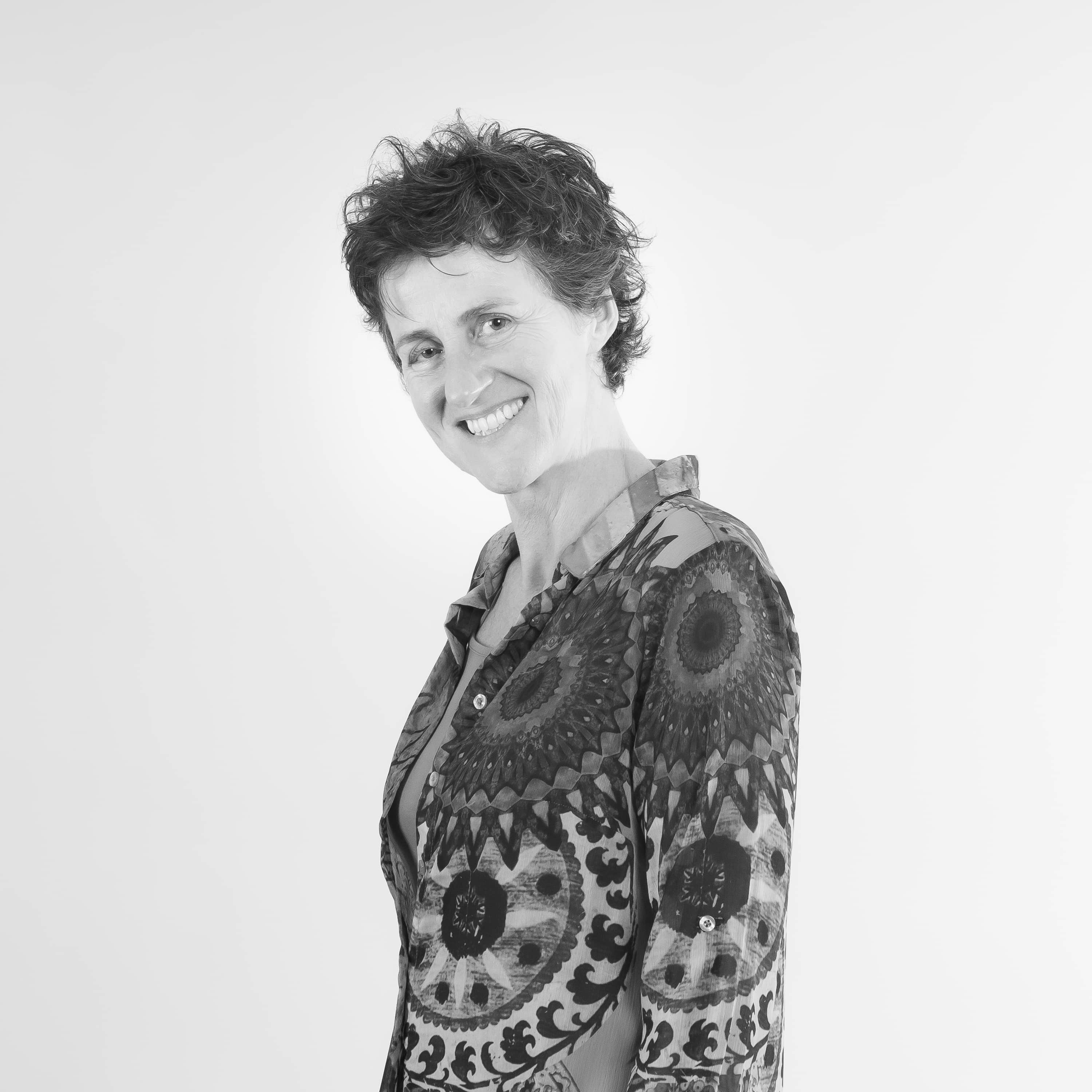
Ellen founded Spring in 2004 and is committed to making space for more complexity and humanity in collaborations for social and climate justice. She is a believer, especially in human potential and our collective ability to address the problems of our time. Her areas of expertise include multi-actor conference facilitation, future-scenario development, financial innovation and health for justice organizations globally, and executive coaching.
Previously she held several management positions at Oxfam-Novib and was the Executive Director of Mama Cash, a feminist foundation based in Amsterdam. Ellen holds a master's degree in Development Studies, an MBA from Erasmus University, and is an Integral Master Coach™ and Certified Integral Facilitator™.
Currently based in Toronto, Ellen is from the Netherlands and Canada and has lived in Tanzania, South Africa, and the United States. She is a curious and creative optimist, an espresso enthusiast, and zen practitioner.
Maria Alejandra works at the intersection of ecologies, economies, and collective imagination. With over 15 years of experience, she has defined her focus through a commitment to collective transformation, climate justice organizing, and the design of initiatives that challenge systemic inequities. Propelled by a political ecology reading of our surroundings, Maria is seeking opportunities to practice the collective governance of financial and ecological resources.
Her professional trajectory reflects a deep alignment with grassroots leadership, having learned movement-organizing skills through global coalitions such as the Global Campaign to Demand Climate Justice. Maria Alejandra co-led youth collaboratives, including Earth in Brackets and TierrActiva Colombia, bridging the gap between international policy and community-based action.
Over the past six years, she has pushed the philanthropic landscape as a participatory grantmaker at Collective Abundance and FRIDA | The Young Feminist Fund, as an advisor to the Global Greengrants Fund Next Generation Climate Board, and as the Board co-chair of the Climate Justice Resilience Fund. Most recently, as Chief Co-creator of the Funder Learning and Action Co-laboratory, she orchestrated the design of a donor collaborative experiment aimed at directing flexible, strategic resources to feminist ecological and climate movements across the Global South. This practical experience is underpinned by a Research Master’s in Rural and Territorial Development from FLACSO Ecuador, a Bachelor's in Human Ecology from the College of the Atlantic in Maine, and a Next Economy MBA from LIFT Economy.
At Spring, she brings an impetus to transition away from philanthropic financial dependence to models of financial resilience and community-owned assets, working closely with the FIRE team on the programmatic and pedagogical evolution of its program.
Based between the Colombian mountains and the German forests, Maria Alejandra brings a cross-regional and cross-sectoral perspective shaped by her time living in Costa Rica, the USA, Ecuador, and Mexico. Bilingual in Spanish and English, she is committed to upping her German. She finds grounding and inspiration on her family’s fruit farm outside of Bogotá, where she explores the potential for community-led energy production and creates spaces of refuge for her community. Whether developing visionary organizational models or stewarding the land, her work remains anchored in the principles of reciprocity, relentless imagining of alternative post-extractivist futures, and the reclamation of the commons. Maria can always be found dancing salsa.
Lucía is a Mexican independent consultant and human rights practitioner with 15 years of experience with a focus on gender, philanthropy, research, project management, stakeholder coordination, and resource mobilization. In recent years, she has worked with corporate foundations to inform their philanthropic strategies in East and Southeast Asia.
Currently, Lucía is the treasurer on the board of FERN, an organization working to achieve environmental and social justice with a focus on forests and forest peoples’ rights in the policies and practices of the European Union. She was the Director of Programs at the Prospera – International Network of Women’s Funds, supporting the growth of dozens of women’s funds worldwide, and has also served on the International Human Rights Funders Group (IHRFG) Advisory Committee for Advancing Human Rights: Knowledge Tools for Funders initiative.
Lucia holds a master’s degree in International Law and Gender from the Universidad Autónoma de Barcelona speaks Spanish, French, and English, and is a seriously dedicated Korean learner for life. She’s based between North America, Central Europe, and East Asia. You can usually find her on the potter’s wheel, collecting textiles from all over the world and seeking warmer climates.
Amany Alhadka has over 20 years of experience working in the areas of operations, finance, and organization management. Throughout her career, she supported many organizations and field operations in Africa, Asia, and Latin America. She specializes in building and strengthening the operational capacity of start-ups and organizations that are growing and scaling.
Before joining Prospera – International Network of Women’s Funds as Senior Advisor Operations Excellence, she was the Vice President for Business Transformation of the Equality Fund and the Vice President for Finance and Operations of the MATCH International Women’s Fund, both in Canada. She also worked at CARE International in Egypt, the USA, and Canada, and MEK Foundation in Egypt.
Amany holds a Bachelor's Degree in Accounting and a Post Graduate Diploma in Financial Accounting and Auditing from Cairo University. She obtained her Public Accountant Certification from the University of Illinois, Chicago, and has certificates in the training of trainers and meeting facilitation. She is based in Ottawa, Canada.
Archana is a creative rights advocate, strategist, communicator, and singer with over 15 years of experience supporting a wide range of human rights and social justice initiatives. At Spring, she leads the design and implementation of virtual and in-person financial resilience, facilitation, and leadership development programs. In recent years, she has overseen the successful delivery of capacity-strengthening programs for hundreds of rights and justice leaders, organizations, and networks globally.
Previously, Archana led the creation and expansion of OpenGlobalRights — a multilingual, global forum that explores human rights policies and strategies as well as managed and conducted research on human rights organizations and public perceptions of human rights in India, Mexico, and Morocco. She has co-authored various publications on the resource mobilization challenges and opportunities for human rights groups in the Global South and is passionate about finding innovative ways to sustain and expand social and climate justice initiatives.
Archana holds a master's degree in International Affairs and is an accredited Integral Master Coach™. She is based in Toronto, Canada, and speaks English, Spanish, French, and Gujarat. She gets her creative juices flowing through dancing with her daughter, painting, and singing.
We work to make our programs as accessible as we can and offer a sliding scale. When you register below, please choose the fee based on your circumstances. Find additional personal considerations here.
This is for organizations based in the Global North or with an annual budget above US$2 million. It’s also designed for individuals with access to wealth or with an annual income over US$70,000. Payment at this rate covers the costs of the program and allows for a contribution to support the participation of organizations and individuals with less access to wealth.
This is for organizations with an annual budget above US$1-2 million. It’s also designed for individuals with an annual income of US$50,000 - US$70,000.
This is for organizations with an annual budget of under US$1 million. It’s also designed for individuals with an annual income of under US$50,000. Payment at this rate covers roughly 30% of total costs.
Solidarity Rate registrations will be capped. Once spots are filled, we will maintain a waitlist. If you cannot register at this tier, please send us an email to get on the waitlist.
Please note that in order to pay using PayPal, you just need a debit or credit card. A PayPal account is not necessary.